Share Buttons

Thursday, February 28, 2019

Bluebonnet Ballerina by Carol Kilgore -- book review


Bluebonnet Ballerina is not your average cops and robbers’ type of suspense.


Readers can expect characters, both live and the ‘gently deceased’, to appear on the pages of Bluebonnet Ballerina. The cast includes ex-CIA, cops – active to reassigned, a best friend complete with her guiding spirit, a couple of love interests, and even a few decades-old ghosts thrown into the mix. The hard hitting world of human trafficking, guns for hire, and genuine bad guys are counterbalanced by a healthy – and much appreciated – dose of the ‘woo-woo’ factor.


Bluebonnet Ballerina is filled with: a plot that MAKES sense – always a pleasant surprise in a suspense novel; characters that are intelligent; and enough Texas scenery to bring the favored destination spot, San Antonio, to life. Through the eyes and exploits of Agent Gracie Hofner, readers can enjoy the city street-by-street. In addition, author Carol Kilgore’s veracity of law-enforcement and criminal investigation research guarantees realism on every page.


As Bluebonnet Ballerina winds down the roads of South Texas, readers will be shocked by a murder or two and the harsh reality of the dark web, but they will enjoy vivid scenes deep with sultry evening air, condensation on long-neck bottles, and breathing a little fire from spicy tacos.


Bluebonnet Ballerina is the second feature in The Amazing Gracie Trilogy. Author, Carol Kilgore, allows frighteningly accurate criminal situations to fully develop, and just like investigations in the real world, readers shouldn’t expect easy answers or for the varied plot lines to wrap up by story’s end.


Other K.M. Saint James book reviews:


A Warlock Under The Mistletoe by S.S. Bazinet


Tempting Mr. Townsend by Anna Campbell


Grey's Lady by Natasha Blackthorne


Giving a Heart of Lace: Sweet and Clean Regency Romance


Wednesday, February 20, 2019

How to entice Readers . . . 5 Writing Tips to Building Book Teasers!


Writing . . . writing . . . and writing. The book is nearing its end.

NOW WHAT????

Before you go crazy considering ALL the things to do for a book launch, focus on something closer to your current writing mind-set.

Every writing day is about producing new words. But it is also about editing what's on page. You polish scene consistency, authentic characters, snappy dialogue, and just enough narrative to set any scene.

So, while completely enmeshed in the writing and rewriting, here is the perfect opportunity to search out book teasers for the upcoming book launch.

Remember, writing as a PROfessional requires authors to hone their craft, daily.


Teasers -- DO's and DON'T's


FIRST-- THERE is NOT a perfect number of words required to produce a great teaser. Don't believe that it must be one paragraph . . . or two paragraphs . . . or three paragraphs. The word count isn't important. The essence of the teaser -- what is revealed -- is, however, crucial.


My mother frequently used the Winston Churchill quote when I was in middle school. Oh, not the good speech part, but the short skirt part.
The concept of just long enough is what's important.

SECOND -- IF you lift text exactly from your WIP, the teaser may leave the reader scratching their head. Consider editing the text for dynamic purpose. Does a line or two need to be removed? Is this text section filled with 'he said/she said', but it doesn't really identify the characters? Is there NO scene setting in the lifted text and your characters have that 'floating in space' problem?


THIRD -- YOU will need more book teasers than you think so it's better to have loads in the hopper then sort through to cull out the best.

I start by sorting book teasers into short, medium, and long categories. If posting to Twitter, keep in mind the character count. If posting to Pinterest, keep in mind the pixel sizing. Consider where you plan to, initially, launch your social media blitz. Be clear on the perimeters to successfully and EFFECTIVELY target that audience. Very often, less is more. Heavy text even on the greatest artwork becomes too cumbersome for readers to scan. Think about movie trailers and how many scenes are flashed on screen in 30 seconds. Concise and poignant is often the best bet.


FOURTH -- INCORPORATE artwork into the teasers. The graphic artist is still hard at work on the final cover design for my second book: Chasing Destiny. In the meantime, I utilized basic concepts and it gives me a working backdrop. Depending on your skill set with 'artistically' based programs, you may build any number of options. The point is to consider the best written offering to attach to the artwork for maximum reader impact.

As I write romance, I select short, medium, and long book teasers that will emphasize sexual tension between my protagonists.

Long teaser:
“You could kiss me." Jaycee's whisper reflected the ache of her soul.
“I thought we didn’t have a relationship."
Uh-oh, maybe she’d misread the clues. It had been a long time since she’d wanted to seduce a man. Scratch that. She’d never wanted a man the way she wanted Garrick Shapiro. Striving for a lighter tone, Jaycee gave his shoulder a playful poke. “I’m talking a simple kiss here."
“There is nothing simple between us." He stroked a thumb across her bottom lip. “Timing’s not great. You’ve already had a roller coaster day."
“Don’t coddle me, Garrick,” she stressed. Reaching out, Jaycee took the initiative. He wasn’t immune to her, not if the fire in his eyes was any sign. “I’ve lived a lifetime with overprotective males. Assume I know my own mind."
“Full sail ahead and damn the reefs, is that it?" He lifted his head, turning his gaze to the distant horizon as if searching for answers. “So, all you want is a kiss?”
Eyes the color of molten steel and filled with every woman’s dream of pure passion turned her way, capturing her breath and holding her a willing prisoner.
This was the look she’d waited for a lifetime.
Jaycee nodded.


Medium teaser:
When Jaycee didn’t immediately take the proffered material, Garrick extended it further. “Go on. It doesn’t bite.”
“What about you?” Embarrassed heat rushed across her cheeks. Great. Smooth. She’d lost what was left of her mind. With a face that probably glowed like a bright red fire truck, Jaycee reached up, pulling down hard on the brim of her baseball cap. “What I meant was . . . you were in such a mood before. . . earlier.” She jerked at the offered folder. “Never mind.”
“On the contrary, Ms. Donovan. It’s a fair question.” His grip tightened, not releasing their paper tether until she lifted her gaze. Flecks of amusement glittered in his glance. “I will admit . . . I’ve been known to bite, but only when invited.”


Short teaser:
Wanting as never before, needing to be closer still, Jaycee slid into his warmth and melted into Garrick's embrace. She was certain, the world ceased to spin because nothing at that moment—his future or her past—none of it mattered.

FIFTH -- CONSIDER the audience for your genre. If writing fantasy, what teasers from your WIP best put the reader under your spell? If writing horror, what teasers from your WIP would scare the living bejesus out of them . . . and of course, make them want to turn the next page?

Finishing the book is a great and fabulous accomplishment. Be certain to celebrate the moment. But on the road to the end, gather a few of your written gems for use as Book Teasers

Be a Better Writer . . .
AT


Teaching an Old Dog (writer) New Tricks. Secrets to Better Writing.


Writing The Perfect Phrase -- studying the masters!


Thursday, February 14, 2019

7 Tips for Travelling the Texas back roads -- weekend road trip!


We in Texas are arrogant folks who believe that spring or summer is ALWAYS just around the corner. We hold this belief with solid evidence to back us up . . . well, at least most of the time.


This past weekend found me travelling on an East Texas backroads trip for a bit of birthday celebration. Hubby didn’t want a big fuss for his BD, didn’t want entertaining, just some quiet time for the two of us.


He had fond memories of a lovely drive through the Davy Crockett National Forest and into Lufkin, TX. (for map clarification, this is East Texas.)


Of course, these memories came from one of his trucking runs, which meant it was mainly made in the dead of night. Lots of things look great in the dead of night. I don’t need to go further with that explanation.


Before we embarked on our journey, I engaged in my usual Internet research. If I’m headed out to a destination, I WILL load up on area sites of interest, restaurants to enjoy and to AVOID, hotel reviews, and perhaps more importantly, off the beaten path points of interest.


I don’t always get it right. And what would be the fun of a vacation without one horror story, but we generally find unique stops and undiscovered gems in eateries.


So, what did I learn from this excursion?


1) Do not go to East Texas in the dead of winter for the scenery. When it’s been fairly cold, when Texas has actually suffered through a hard freeze or two . . . the trees will be bare and bereft of leaves. Please, don’t misunderstand me. There are times that barren landscapes feed my soul. But when I’m after a cozy getaway—not so much. Consider that if you’re headed into an area or part of the country that’s known for its GREEN, don’t go during the dead of winter. That much barrenness simply becomes bleak.


2) Be cautious about museums that sport only a handful of ‘open’ hours per week. Also, if you are completely unfamiliar with an area, call in advance to confirm address and hours. Our excursion hunting the Houston County Museum in Crockett, TX turned out to be an exercise in futility. Either the address (from 3 references) was woefully incorrect or my GPS lost its mind. We drove down poorly maintained roads, drove in circles, drove for waaay too long, and still couldn’t discover the missing museum. A call to the location netted their answering machine (quaint accent, but not a live person) and a Google search for the exact museum name from the answering machine listed a location 112 miles away. Um . . . I don’t think so. We did explore Goliad Avenue. Several times. We found the local DQ and shared their last Dilly Bar. And we found our way out of town.

3) Enjoy the unexpected. The DQ visit netted a couple of good ole cowboys, one complete with spurs. No chaps, but boots, jeans, hat and . . . the spurs. In Texas pickup trucks rule the roads. Freeways, city streets, country roads will all sport a plethora of brand spanking-new to old enough to be held together by rust, duct tape, and memories. Dusty windshields, grimy bumpers, mud-crusted wheels, the working pickup trucks dotted the Crocket DQ parking lot. Hubby & I figured – which is what you do when in Texas – that the cowboys belonged to one of the pickup trucks. We figured right. They climbed into a King cab, complete with animal trailer and one serious-looking bull then were off in a cloud of Dairy Queen parking lot dust. Small Texas towns provide their own eclectic version of everyday folks and for those of us who watch the world, loads of moment-by-moment entertainment.


4) If the area that you visit delivers any type of local newspaper or glad rag, pick it up. A great meal was found at the Clear Spring CafĂ© in Nacogdoches, TX. That locale didn’t show up on my Google searches or my Yelp request. I can’t answer why as once I researched the specific name, Yelp loaded scads of happy Texans reviews. Their webpage loaded easily and had all the things that tick the boxes for me. It was a win. The freshly prepped onion rings are worth the stop, and this close to the Louisiana border, the Cajun influence could be found.


5) Talk to the hotel front desk. I will warn you . . . this can provide hit-or-miss results. If the desk clerk responds to your area questions, with a blank look – don’t pursue it. They often struggle to be helpful and you end up with less than sterling results. If, however, the clerk offers ready suggestions and knows details, then you’ve found a mining source for your stay.


6) State & National Parks can add to the adventure. We have now purchased a National Geographic book and are hoping for better results on our future impromptu road trips. A National or State park always seems like a good excursion, but driving through the Davy Crockett National Forest did disappoint. The posted speed limit is 70. Do you know what scenery looks like @ 70? A blur. We saw several upcoming historical marker signs, but never actually saw the memorial. Again, at 70, and below – we were in the right-hand lane – who knows what all we missed.


7) Historic downtowns – a sure score for Nacogdoches, which is billed as the oldest town in Texas. Old brick streets, buildings with the well-worn wooden floors – creaky and sloped, twenty foot ceilings, even a few with original lead glass. Historic Nacogdoches didn’t disappoint. Most clerks in the stores were the actual owners. Loads of great stories and folks who’d spent their lives in the area. We discovered an Artesian Stained-glass window & door builder (his shop is part of the store); antique stores (some set-up with the booths for browsing), but one was a shotgun building no more than fifteen feet wide, filled with widgets and gadgets from the former century and that musty, dusty scent you can only find in truly dated buildings; the last store find was filled with a barrel-chested fiddle maker with his pot-bellied red hot stove and his trusty banjo companions strumming away in one warm corner. It was fabulous.


No matter where we go, coming home is always wonderful. Perhaps the outside scenery wasn’t all we could have hoped for . . . but life is about the journey and this weekend getaway will always hold precious memories.


Other Texas Spots to VISIT:


5 Fabulous Fort Worth Bars -- not your standard honky-tonk!


Wednesday, February 6, 2019

6 Steps to Editing Like a PROfessional!


Editing is hard work . . . anyone who tells you differently is selling something.


Editing is part of every writer’s job . . . anyone who tells you differently is selling something.


Finding the time, and more importantly, making that time count is how the PROfessionals edit.

Below are 6 editing tricks to enhance your writing.


1) Find your editing groove. For some this is EARLY when eyes are the sharpest and focus is the clearest. For others their peak time might be mid-to-late afternoon. Caffeine kicks in, morning rush dies down and – again, this is about focus – the brain settles into a rhythm.


I caution against late night editing. Eyes are slower for all the image bombardment of the day. Eagle eyes are needed for great editing. If, however, evening is the ONLY quiet time – then read the sentences aloud. That’s the best way to catch what’s actually on the page.


2) Highlight sticking points. One particular sentence seem muddy? Dialogue exchange stilted? Blocking in the scene missing? Think about it. Mull it over. But NOT TOO LONG. Don’t get dragged into the writing whirlpool and expect to rescue every drowning sentence. Highlight the sticking points and then MOVE on.


The solution to the original hiccup may reveal itself a page later . . . two pages later . . . when you’re in the shower. (That’s a biggy for me. My dialogue is suddenly brilliant while I’m in the shower. Ink blots and smudges really can tell a story.)


3) Great editing is about condensing.
A) Don’t be afraid to rip out meandering dialogue. Think about that friend (or relative) who never met a short story. Get to the point. B) Scene setting is necessary; world-building may be a must for your genre. But readers will skip loooooong descriptive passages. Focus on the specific elements that make that particular description important then highlight those aspects. C) Adverbs are NOT a writer’s friend. Use with caution.


4) Enhance chapter hooks. Can you name 3 writers that make it impossible for you to put down their book? Why? Great writing – sure. Good plot – absolutely. Superb characters – goes without saying. But I’d place a bet . . . on chapter hooks. How do you hone that skill?
A) Study the timing your favorite authors employ. B) Study 30-minute TV shows. C) Study YA novella authors.
One of my go-to authors is Gary Paulsen. He started in short serials before moving to YA novels. He wrote for youth at an easily distracted age, yet he kept them turning the pages.


If adverbs should be avoided like the plague, then chapter hooks should be embraced liked antibiotics.


5) During editing pay close attention to easy-to-transpose words.
A) patient vs. patience; B) complied vs. compiled; C) advise vs. advice. D) analyze vs. analysis; E) ever vs. every.
The list can be endless, and even tedious. If you’re unsure on the correct version, highlight the word and check for synonyms. Still confused? Use Dictionary.com or your favorite online word source. I work with double monitors to keep support sources easily accessible.


6) Step six to editing like a PRO is an extension of step five. Be aware of your go-to words. One of my writing redundancies is ‘back’. Step back. Go back. He moved back. Her back. His back. Back off. Back away. Am I backing myself into a corner? Find a word cloud program, even a Plain Jane version in your document program of choice, then analyze a scene or chapter. If you are guilty of lazy repetition, it will leap off the page.


Good news for writers everywhere: Editing like a PROfessional writer is a learned skill.


You don’t expect to be a fabulous writer first rattle out of the box.


As a writer, you’ll create loads of boxes (stories) and each one will require editing (loads of editing).


Add these 6 editing tips to your writer’s arsenal and you will deliver more concise and enjoyable words to page.


Be at BETTER WRITER
AT


How to entice Readers . . . 5 Writing Tips to Building Book Teasers!


Writing the Perfect Phrase -- study the masters!


Friday, January 25, 2019

Book Club Pro - an author promotional and marketing option!


I'll start with the obvious. This is a blog about BookClubPro, a promotional and author marketing environment for the Twitter feed.

I discovered this opportunity on Twitter via Stacie Sultrie, a Paranormal Romance Author.

Registering for Book Club Pro took about 30 minutes out of my schedule. The registration sheet is comprised of basic questions, book links, author bio, book blurb, and if you have them in your wheelhouse, COMPRESSED TWEETS that Book Club Pro can use to promote your book. As I did not have all this information gathered, there was a bit of maneuvering between my Amazon site and my word document that contained my compressed tweets, but the entire process was painless. And the exercise forced me to compose a few of the missing links for the next promotional adventure.

I'll keep you posted as to the effect of BookClubPro . . . or if you've used this service or other author promotional services, please share.

Oh, and the best part --it was FREE.


Writing is hard work and always deserves our best effort. Sharing that BEST effort with readers can be daunting and taxing for authors.

May 2019 be our year to find great author marketing and promotional sites.


Thursday, January 10, 2019

A Writer's Magic - as close as fingertips!


Harry Potter used a wand. Bewitched twitched her nose. Harry Dresden wielded a staff.
Writers come with their own special form of magic.
Whether it's pen to pad, stylus to tablet, or keyboard to PC . . . a writer's magic is as close as fingertips.

New writers often feel that they must pursue fiction writing as they don't carry a bag of non-fiction writing tricks.


Don't allow the concept of non-fiction writing to intimidate.

Consider the 3 easily defined categories:


Educating: How-to-manuals, directions, historical explanations, or scientific explorations fall into this category.

Influencing or persuasive: Every sales brochure, each editorial, even academic critiques are designed to persuade the reader to a certain conclusion.

Narrative: story-telling, but in the non-fiction circuit it is to be based on facts. Basic journalism to feature writing, and even biographies would fall under the Narrative heading.

Many authors not only cross genres, but modes of writing between fiction and non-fiction. A writing paycheck can come from a variety of sources and it is the wise writer who pursues all opportunities.

But, this is a cautionary tale . . . Fiction and Non-fiction are NOT the same writing beast, and must be courted differently in order to achieve successful results.


Be concise: get to the point. Getting to the point is crucial in non-fiction.


Know the point of your writing and get on with it.
A) There is some leniency in the narrative form, but study news stories – both print and online – to gauge the quick pacing of these pieces.
B) Educational writing varies wildly and while How-To-Manuals and Directions often taken on the bulleted-format, lengthy historical explanations and in-depth scientific explorations must still contain a very specific path from premise to conclusion. Be careful not to lose your way when working on the longer formats. Outlines can be a non-fiction writer’s best friend.
C) Persuasive or influencing: this writing can be as short as a tag line, a book blurb, a closing sales pitch or deal with weighty issues from politics to retirement planning. A clearly defined goal is the most certain way to achieve the end result of the writing.


Language choices: use power words and precision language.


Keeping in line with the Be Concise attitude, force each of your words to carry their weight. Know (and keep a list) of verbs that are effective and reflective on your subject matter. Equally important, know precisely how to describe the product, the ideal, the event.


Pronouns: the NO-NO for non-fiction writing.
Fiction writers often court pronouns like a torrid love affair. They, those tiny pronouns, can essentially disappear on page and not slow reading. HOWEVER, and it is a huge however for non-fiction writing, especially technical and legal writing, pronouns provide opportunities for confusion. The average fiction reader may not mind re-reading a sentence or even a paragraph if lost in a point-of-view. However, a judge reviewing a motion, brief, or filing will take a dim view of that necessity and however, the mechanic handling a brake job doesn’t want to re-read confusing installation directions due to pronouns. See, I told you it was a huge HOWEVER.


Grammar Rules: they are meant to be followed in non-fiction writing.

Fiction authors, novice to NY Times best sellers will routinely break grammar rules. Unfortunately, many novice writers don’t know they have broken the rules, but that discussion is for another blog post. Non-fiction writers must be intimate with books such as The Chicago Manual of Style; Essentials of English Grammar: The Quick Guide to Good English; and Basic English Grammar for Dummies.


Perhaps, you have read through this blog and questioned?????

But . . .

Aren’t these areas equally important for fiction writers?


Caught me.

I will confirm – GOOD WRITING SHOULD BE GOOD WRITING.


Great fiction writers will brain-storm, outline, and plot in order to begin stories at the most exciting moment and conclude with the perfect resolution. They’ll utilize story-boards, Post-it Notes, Trello boards and various techniques to start and end each scene, chapter, and novel with precision.

Great fiction writers will hone their language choices, then eliminate sentences, paragraphs and even scenes that drag the pacing. Their characters will always ask the right question, supply the most scathing rebuttal, and declare unfaltering devotion with a prose to rival Shakespeare.

Pronouns in fiction writing are more acceptable, and can, indeed, speed reading. But ONLY when done well. Great fiction writers pay careful attention to the use of dialogue tags, body blocking, and paragraph construction to guarantee that readers can easily follow along when pronouns are employed. In other words, these marvelous authors utilize precise language to lead the reader through any maze of pronouns.

Finally, fiction readers will forgive the occasional grammar break, but they depend . . . NO, I believe, they demand that their great fiction writers KNOW those rules and break with intent.

It’s worth saying again – GOOD WRITING SHOULD BE GOOD WRITING.


Whether you are starting your blogging career or completing your first manuscript, consider these writing tips to hone your Non-Fiction skills.
.

Friday, January 4, 2019

Marketing Plan of Action - how to start simple and build to great!


Tim Grahl, author of Your First 1000 Copies and founder of booklaunch.com
believes that Marketing doesn't need to be a 'eew' prospect.

So, I've read over a few of his techniques and decided to break-it down into a Plan of Action.
New Year . . . New Goals . . . and all that.
More importantly, it's about finding a way to market that doesn't make the author in me cringe at the idea
.


READ ALONG & SEE IF YOU AGREE

According to Tim, MARKETING is about creating long-lasting connections. I'd say this is sound business whether you're selling books, artwork or cars off the used lot. None of us want just the ONE-AND-DONE customer. We want repeat business. We want to develop long-lasting connections/relationships that will keep folks coming back because they're pleased with their purchase.

Tim breaks it down into three categories for connection.


1) Outreach – The act of moving people from not knowing I exist to knowing that I DO exist.

Here are my ideas:

a. Facebook
b. Twitter
c. Pinterest
d. Blog
e. Book-signings
f. Public readings
g. Carrying a business card with my books/blog listed AND handed those out.
i. Where can I leave these?
1. With every receipt/tip I leave on a table
2. Any bulletin board
3. Any clerk that I speak with and mention I'm a writer
ii. Order from Vista-Print
h. Get some print copies of books and carry them on vacation –
i. Look for independent book stores and ask if I can donate a few copies.
ii. Libraries
i. Interview on Podcast
j. Book reviews
k. Post a lot on Reddit


2) Content: Providing a way for people to get to know me and my writing.


Again, here are my immediate thoughts:

a. Blog writing
b. Book teasers
c. Samples listed on Amazon
d. Samples listed on my blog.


3) Permission: A way to stay in contact with people long-term.


a. Build an email list – remember that I'm looking for a way to stay in long-term contact with these folks so that every time I release a book they’ll know about it.
b. Gain readers for the blog – this is interactive: if readers come back to the blog and see the new releases, they'll be more likely to purchase. Readers can't buy what they don't know about.
i. Building readership to the blog is a way to not only introduce my writing, but to encourage folks to experience my voice, my style of writing. Ultimately, I want readers to be pleased with their purchase and feel like their funds were well-spent.

So a huge Thank You to Tim Grahl and his insight.

To me these are more than goals for 2019 -- this is a Plan of Action.

Do you have other ideas????? Other plans that have worked for you?????

Please feel free to comment, or send me a Twitter reply.


K.M.Saint James
@LoneStarMeander


Learn More! Additional Writing Tips . . .

A Writer's Magic . . . as close as fingertips!

6 Steps to Editing like a PROfessional!


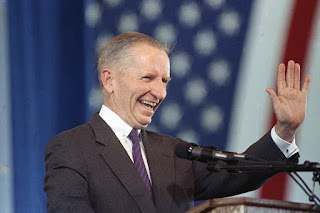
Famous Texan -- The Simple (and Complicated) Life of a Texas Titan: Ross Perot

A Texas Titan and legend has left the great state of Texas for the last time. H. Ross Perot, age 89, passed away Tuesday, July 9th, 2019. ...